
Posted in Buyers, Sellers

Thinking About Making a Real Estate Move in Juneau County Right Now?

Liz Walker | Juneau County Real Estate Expert

What Would a Local Real Estate Professional Actually Do in This Market?

If you live in Juneau County, you already know our market doesn’t behave like Madison, Milwaukee, or what you see on national headlines. Homes here move differently. Inventory behaves differently. Buyers and sellers make decisions based on real life — not trends on TikTok or cable news.

Still, the uncertainty is real.

Whether you’re buying, selling, or staying put in New Lisbon, Mauston, Necedah, Elroy, Wonewoc, or Lyndon Station, it’s normal to wonder if now is the right time to make a move.

Most people don’t buy or sell property often. And when they do, the stakes feel high — especially in a market where interest rates, affordability, and inventory are all part of the conversation.

One question comes up again and again:

What would a local real estate professional actually do in this market?

Not in theory. Not based on national advice. But based on how real estate actually works here in Juneau County.

This guide breaks that down.

If I Were Buying a Home in Juneau County Right Now

Buying a home in Juneau County comes with unique considerations. We don’t have endless new construction. Many homes are older. Inventory varies wildly by town, neighborhood, and even by street.

Here’s how I’d approach buying locally right now.

Location Matters — Even More in Small-Town Markets

In Juneau County, location isn’t just about the city name — it’s about the street, the lot, and the surroundings.

When evaluating homes in places like New Lisbon, Elroy, or Wonewoc, I’d pay close attention to things that don’t show up in listing photos: proximity to highways or rail lines, traffic flow, neighboring properties, floodplain considerations, and how the home fits into the immediate area.

You can update kitchens. You can replace flooring. You can’t move the house.

A solid location in Mauston or a well-positioned property in Necedah will hold value far better long-term than a fully renovated home in a compromised spot.

Financing Strength Matters in Our Local Market

In Juneau County, sellers care deeply about certainty. A strong offer isn’t just about price — it’s about confidence that the deal will close.

That’s why lender choice matters. I’d want a lender who understands rural appraisals, well and septic systems, older housing stock, and local timelines. Missed deadlines or appraisal issues can derail deals quickly in smaller markets.

A well-prepared buyer with a reliable lender often beats a higher offer that feels risky.

Trying to Time Rates Can Backfire Locally

Many buyers are waiting for rates to drop — and when they do, competition here will increase. That’s especially true in affordable price ranges common in Juneau County.

Lower rates often bring more buyers into the market, which can push prices up and reduce negotiating power. The difference in monthly payment between waiting and acting now is often smaller than people expect.

Personally my husband and I have refinanced our mortgage several times in order to take advantage of a lower interest rate. We purchased our first home with a 9% rate then a couple years later rates dropped to 7%. Our current home was initially at a 6.5% rate and over the last 20 years we’ve managed to refinance that down below 3%. The point is don’t wait for the low rate to buy, rather buy now and refinance if the rates fall by at least a percentage point.

If the home fits your budget, lifestyle, and long-term plans, waiting for perfect conditions can mean missing the right opportunity.

Buyer Takeaway (Juneau County Edition)

I wouldn’t wait for a “perfect” market. I’d stay ready and act when the right home, in the right location, at the right price shows up.

If I Were Selling a Home in Juneau County Right Now

Selling in Juneau County requires a different mindset than larger metro areas. Buyers here are practical, informed, and cautious — but they are absolutely active.

Strategic Pricing Creates Momentum

Overpricing is especially damaging in smaller markets. When a home sits too long in New Lisbon or Lyndon Station, buyers notice — and they start asking why.

Pricing slightly below market value can bring in more qualified buyers, create urgency, and sometimes generate multiple offers. Momentum matters, even here.

Homes that launch correctly often outperform homes that chase the market downward.

Preparation Still Wins — Even Outside Spring

Serious buyers don’t shop based on seasons alone. Job changes, family needs, and life events happen year-round.

If I were selling, I’d treat it like peak season: create curb appeal, a clean and well-presented home, and addressing known issues upfront. In older housing markets like ours, pre-listing inspections can be especially powerful in building buyer confidence.

Prepared homes stand out — and they sell stronger.

Personal Timing Beats Market Headlines

Whether you’re upsizing, downsizing, relocating, or simplifying life, your timeline matters more than headlines.

A well-prepared home in Juneau County can sell successfully in any season when pricing and strategy align. Waiting isn’t always safer — especially if you’re already ready.

Seller Takeaway (Juneau County Edition)

I wouldn’t try to time the market. I’d prepare for it, price smart, and move forward when it makes sense for my life.

If I Were a Homeowner in Juneau County Right Now

Homeownership here often means older homes, ongoing maintenance, and long-term planning.

Protect the Structure First

Roofing, siding, drainage, HVAC, plumbing, and foundation issues should come before cosmetic updates. In our climate, deferred maintenance can turn into expensive problems fast.

Not everything needs to be fixed immediately — but priorities matter.

Stay Informed on Value and Equity

I’d keep track of recent sales in my area — not for comparison, but for awareness. Knowing your home’s value helps with refinancing, planning renovations, or preparing for future moves.

Home equity is a tool — but only if you understand it.

Treat the Home Like an Asset

Insurance coverage, property tax accuracy, homestead exemptions, and maintenance records all matter. Being proactive gives homeowners flexibility if life changes quickly.

Homeowner Takeaway (Juneau County Edition)

I’d treat my home like a long-term asset — one that benefits from planning, care, and attention.

Final Thoughts: A Juneau County Real Estate Reality Check

Real estate decisions don’t need to feel overwhelming — but they do need to be grounded in reality.

Juneau County isn’t driven by national trends alone. It’s driven by people, timing, preparation, and local knowledge. Whether you’re buying, selling, renting, or staying put, the smartest decisions come from clarity — not noise.

This is how I’d approach the market right now, right here.

And if you ever want to talk through your options — based on your town, your timeline, and your goals — that’s a conversation worth having.

Ready to Talk Real Estate?

Serving Mauston, New Lisbon, Necedah, Elroy, Wonewoc, Lyndon Station, Wisconsin Dells, Adams, Friendship, Tomah, Camp Douglas, and Oakdale

Contact Liz Walker | RE/MAX

© 2026 Liz Walker | RE/MAX | Juneau County Real Estate Expert

Mauston | New Lisbon | Necedah | Elroy | Wonewoc | Lyndon Station | Wisconsin Dells | Adams | Friendship | Tomah | Camp Douglas | Oakdale

Posted in Uncategorized

The Stuff No One Tells You Until You’ve Lived It

Real estate comes with all kinds of surprises — even when you swear you’ve done everything right. Everyone’s heard the stories: the friend who regretted their agent choice, the contractor who left someone hanging mid-project, the “dream home” that came with a few realities no one warned them about.

You take notes, you ask questions, you try to learn from other people’s mistakes. But sooner or later, something pops up that makes you say, “Seriously… why did NO ONE tell me this?”

The truth? Real estate is layered. Whether you’re buying, selling, renting, or fixing up the place you already own, there are details you only learn once you’re in the thick of it. You can’t avoid every surprise — but the major regrets? Those are almost always preventable when you know what to look out for.

This is the stuff people usually figure out too late. Let’s get ahead of it.


BUYERS

What Buyers Always Wish They’d Known Sooner

Anyone who’s bought a home will eventually confess something like, “We love it now, but I wish we had… insert hard-earned lesson here.”

Maybe they didn’t ask enough questions. Maybe they stretched their budget too tight. Maybe they were dazzled by a pretty kitchen and forgot to check what the neighborhood is like before school drop-off.

Buying a home is exciting, but it’s also emotional and fast. If you want to dodge the classic regrets, here’s where to start:

1. Your heart can pick the home — but your brain should handle the contract.

Falling in love with a house is normal. But emotion alone will talk you into ignoring red flags like aging roofs, loud neighbors, or expensive repairs.

The goal isn’t to shut down your gut feeling — just pair it with logic, data, and a willingness to walk away if something doesn’t line up.

2. You’re not just buying the house — you’re buying the entire life around it.

Most people tour the home and forget to tour the area.
And honestly? The area impacts your daily life 10x more than the countertops ever will.

Visit at different times of day. Drive the commute. Check noise, lighting, traffic, parking, and amenities. Make sure the life that comes with the home fits you.

3. Your real budget isn’t the lender’s number.

A pre-approval shows what a bank is comfortable lending — not what actually works for your lifestyle.
Once you add taxes, insurance, utilities, repairs, furniture, and “wow, this doesn’t fit the new house” purchases, the top of your pre-approval often feels tight.

Many buyers end up happier when they buy a little below their max. It leaves room to breathe — and to improve the home over time.

Buyer Takeaway:

The best decisions happen when your emotions and your strategy work together. Stay curious, ask more questions than you think you need to, and take your time. A confident “yes” beats a rushed regret every single time.


SELLERS

Regrets Sellers Share — And How To Avoid Them

Selling a home digs up its own set of “ugh, I wish we hadn’t done that” moments. The market changes constantly, and unless you sell often, it’s easy to miss major shifts in pricing, prep work, or buyer expectations.

Here’s where sellers usually stumble:

1. Overpricing upfront usually backfires.

Sellers often overvalue their home because they’re attached to it — or they’re watching list prices instead of actual sales data.

Overpricing leads to longer days on market, price drops, and buyers thinking something’s wrong with the property.

Strategic pricing isn’t underselling your home — it’s positioning it so it gets attention fast and builds competition.

2. Skipping prep work leaves real money on the table.

The “just list it and see what happens” approach is one of the fastest ways to lose buyer interest.
Fresh paint, minor repairs, deep cleaning, decluttering, staging — these steps can swing thousands of dollars in your favor.

Buyers decide how they feel about a home in the first few minutes. Make those minutes count.

3. Your agent matters — more than most people realize.

A skilled agent isn’t just unlocking doors. They’re running market analysis, tracking pricing shifts, catching red flags in offers, and negotiating hard on your behalf.

I’ve seen sellers assume their market was “hot” only to find out the high sales they were watching came after huge price cuts and concessions hidden under the surface. That’s the kind of nuance you don’t see on consumer sites — but it directly impacts your bottom line.

Seller Takeaway:

Successful sellers aren’t lucky — they’re strategic.
Price with data, prep intentionally, and work with someone who understands the market beyond the headlines.


RENTERS

Renting Seems Simple — Until It Isn’t

Renting feels low-pressure compared to owning, but renters deal with their own version of regrets — usually because they moved too fast or didn’t dig into the details.

Here’s what trips people up:

1. Reading the lease isn’t the same as understanding the lease.

The fine print covers things like rent increases, deposits, pets, guests, repairs, and early termination.
If you don’t fully understand what you’re signing, you could get burned later.

Ask questions. Get clarity. Don’t assume anything is “standard.”

2. The perfect place at the wrong time still ends up being the wrong place.

Renters often force a place to “make sense” even when it strains the budget or no longer fits their lifestyle. Flexibility is the whole point of renting — use it.

3. If you don’t document the condition, you’re risking your deposit.

Photos. Videos. Notes. Emails.
If you don’t record the condition when you move in, you might be blamed for damage that was already there.

Renter Takeaway:

Renting isn’t lower-stakes — it’s just different stakes. Be intentional, ask questions, and protect yourself with documentation.


HOMEOWNERS

The “No One Warned Me About That” Chapter of Homeownership

Even when everything looks good on inspection, surprises love to show up after closing.

Here’s where homeowners usually feel blindsided:

1. Small maintenance issues become big expenses if you ignore them.

Leaky pipes, clogged gutters, aging HVAC units — little things turn into big bills fast.
A basic seasonal checklist and a slush fund for repairs make a massive difference. Try saving 2% of the purchase price every year for those unsuspected pop up repairs.

2. The layout that looked amazing during showings might not work for real life.

That open floor plan? Great until someone’s on a Zoom call and someone else is making breakfast.
Sometimes the fix is simple — rearranging spaces, adding storage, or making small functional tweaks.

3. Owning a home doesn’t mean you can do anything you want with it.

Local zoning, setbacks, ordinances, and HOA rules all have a say.
Before you build a shed, add animals, rent the home short-term, or take down trees — check the rules. It can save you serious money and headaches.

Homeowner Takeaway:

Homeownership always comes with surprises, but being proactive reduces how often you get caught off guard.


THE BOTTOM LINE

Hindsight is helpful — but foresight is powerful.

Most real estate regrets come from not knowing the right questions to ask until it’s too late. If you stay curious, stay realistic, and stay informed, you’ll sidestep a lot of the stress that catches people off guard.

And that’s exactly why I share what I share — so you don’t have to learn the hard way.

Posted in Uncategorized

How Falling Mortgage Rates Are Shifting the Seller’s Game in Central Wisconsin

(And what you – the homeowner – really should do now)

Let’s be real — the Wisconsin housing market is changing again, and this time, it’s in your favor if you move strategically. Here’s what’s actually happening right now.


1. The Current Market Snapshot

Let’s cut to it: the data says things are shifting.

  • Statewide: Home sales rose 8.1% in June 2025 compared to June 2024 — the first year-over-year gain in four years (WRA, WisPolitics).
  • Median Wisconsin home price: ~$340,000, up 4.6% YoY.
  • Inventory: 23,881 homes for sale statewide in August 2025 — up 3.2% from a year ago (Redfin).
  • Juneau County: Average home value $264,217 (↑ 6.1% YoY), but median sold price $226,250 (↓ 9.5% YoY).
  • New Lisbon: Average home value $303,278 (Zillow).

Mortgage rates have eased slightly (Churchill Mortgage), giving buyers more breathing room — and giving sellers a reason to make moves before winter hits.


2. What This Means for Sellers (Yes, That’s You)

Here’s the unfiltered truth: the playing field’s changing, and smart sellers will get ahead of it.

  • More buyers can afford now: A small rate drop means a noticeable boost in buyer affordability.
  • But competition’s creeping back: Inventory is ticking up — the “list and sell overnight” era is over.
  • The good news: Juneau County home values rose about 6% year-over-year.
  • The warning: Median sold prices are down almost 10% from last year — so keep expectations realistic.
  • Timing matters: Fall is when serious buyers make moves before snow flies. The Wisconsin fall market tends to balance out between buyers and sellers (Sold in Madison).

3. What This Means for Buyers

Buyers have a bit more leverage now — but they’re picky.

  • They’ll pay for turnkey homes, not “projects.”
  • They notice upgrades: modern kitchens, efficient HVAC, clean roofs, and tidy landscaping.
  • If your home feels neglected or overpriced, they’ll move on or ask for concessions.
    So don’t wing it. Prep with intention and make your property the one that stands out.

4. Smart Checklist for Sellers

Get a current market value or pricing consultation.
Use real comps, not Zillow guesses. Acreage, outbuildings, and condition all factor in.

Prep the home.

  • Declutter ruthlessly.
  • Curb appeal sells — trim, mulch, add fall color.
  • Check major systems (roof, HVAC, septic/well). Fix what’s needed.

List at the right time and price.

  • Inventory’s still low, but rising — price smart.
  • Aim for “competitive and strategic,” not wishful thinking.
  • Fall buyers want to close before the holidays.

Be ready to act fast.
Buyers move quicker when rates drop — so have inspections, disclosures, and paperwork lined up.

Show value.
Highlight what makes your property special — gardens, trails, workshops, or that sweet chicken coop you love.


5. Reality Check (Because I Don’t Sugar-Coat)

Rates are easing, but they’re still higher than the pandemic lows. Some buyers are stretched thin. That means:

  • You’ll likely negotiate — and that’s fine.
  • Overpricing will kill momentum.
  • Time on market = lost opportunity.

Bottom line: don’t bank on hype. Use this as a window of opportunity to move while buyers are active and before winter quiets the market.


6. Let’s Get Going

If you’re even thinking about selling, now’s the time to prep.

Here’s what I offer:

  • Free property valuation using current comps and your property’s unique features.
  • Custom marketing plan built around your home’s story — homestead vibe, acreage, trails, garden, and all.
  • Step-by-step timeline so your home doesn’t sit through the slow season.

Let’s make your move strategic — not rushed.

Posted in Homeowners, Sellers

The Ultimate Home Selling Checklist

If you’re selling a house while looking for a new one, working, and taking care of children or elderly relatives, you need organization tools! Stay on track with our detailed home selling checklist to make sure nothing falls through the cracks.

Prior to Listing

Get started before you put your house on the market. Having all your ducks in a row will make the selling process smoother and quicker. Here is a pre-listing checklist for selling a home:

Assemble Your Financial Documentation

Getting the necessary paperwork together will help you feel more organized and prepare you to answer questions from buyers and buyers’ agents as they arise. Get electronic and hard copies of:

  • Mortgage balance, so you know exactly how much you still owe, and to calculate your potential net proceeds when you get an offer.
  • Property taxes and condo/ HOA fees to show to buyers so they know what their ongoing costs will be.
  • Receipts for major improvements and new appliances which can help justify your asking price.
  • Homeowners insurance details in case buyers and lenders ask about past claims or issues with getting insurance coverage.
  • Warranty paperwork and manuals for appliances and systems so buyers can see that these big-ticket items are still covered.
  • Permits for improvements, additions, and renovations.
  • Property surveys and boundary maps, if appropriate.

Property Evaluation and Bigger Repairs

Every checklist for selling a home should include doing needed repairs. These can take time and be a bit messy, so you’ll want to take care of these before any showings:

  • Arrange a pre-listing home inspection to identify potential problems that you may be overlooking or that you’ve gotten so used to that you don’t notice them.
  • Fix any safety hazards or major functional issues such as exposed wiring, loose railings, leaky taps, or missing smoke detectors.
  • Replace or remove appliances that are clearly non-functional, dirty, or rusty.

Interior Fixes

To get ready for showings, use this checklist when selling a home:

  • Declutter and depersonalize all your rooms to help potential buyers imagine themselves living there. Create a neutral environment where buyers can easily picture their own furnishings and décor.
  • Deep clean everything, including the carpets. Not only does a spotless home look well-maintained, but it will appear move-in ready; buyers won’t have to worry about spending weeks cleaning before they can even move in. Professional cleaning is a great investment if you don’t have time to do this yourself.
  • Paint your walls in a neutral color where needed, covering up any bright accent walls.
  • Ensure all your light fixtures work and can illuminate the space to its best advantage. Make sure all the light bulbs in a room are the same color.
  • Address odors from pets, cooking, or smoking. You may have gotten accustomed to these, so have your real estate agent or a neighbor tour your home and give you honest feedback.
  • Stage the key areas of the home, such as the living room and primary bedroom.

Exterior Cleaning and Updates

The outside of your home and your landscaping are the first things buyers will see. Use this exterior selling home checklist to get your home ready for showings:

  • Trim your hedges and mow your lawn, weed and add fresh mulch to flower beds.
  • Get some bright potted plants to make the entrance more appealing.
  • Power wash your siding, driveway and walkways.
  • Ensure the front door and entry are safe and welcoming. Consider repainting the door, replacing the hardware with a fresh modern set, and getting a new doormat to make the home look well cared for.
  • Replace spongy or loose deck boards, and make sure deck railings are stable.
  • Spruce up exterior living spaces to make them look inviting.

This part of your home selling checklist will take time to complete, but it doesn’t have to be expensive. Take the time to properly evaluate your home and schedule your fixes to proceed at a steady pace.

Marketing Your Home

Once you’ve gotten your home ready to show, it’s time to start getting eyes on your listing. Here are some key steps for your “getting my home ready to sell” checklist:

  • Hire an experience real estate agent that will use quality photography (not just cell phone pictures). They will take multiple high-quality images that present your home in flattering lighting and from the best angles. Since most homebuyers browse listings before touring any homes, excellent photography is the way to stand out from the competition.
  • Ask about virtual tours and video walkthroughs to help buyers tour the house at their own pace. These tools can be especially helpful for out-of-state buyers who are building a shortlist of homes to visit when they’re in town.
  • Get drone photography or video for large lots and properties that are near appealing features such as lakes, rivers, and forested areas.
  • Review your listing details to make sure nothing was missed, and the best aspects of your property are highlighted.
  • Gather information about the neighborhood, the school district, and local amenities to showcase your home in its context. Why leave it up to buyers to do this research when you can present it to them yourself?
  • Prepare information that includes neighborhood information, floor plans, utility costs, property tax bills, and a list of recent updates. 
  • Make a list of things you love about your home so your real estate agent knows how to market the lifestyle your home offers.

Selling a home can be a flurry of activity, but with a detailed selling home checklist, you can stay on track for a successful sale and closing. Work closely with your real estate agent to make sure you’re not missing anything; they’ve been through this process many times and will give you excellent guidance!

Posted in Buyers, Sellers

Is the Real Estate Market finally Crashing?

The 2025 Housing Market: Cooling, Yet Surprisingly Resilient

The real estate market is always evolving, and 2025 is proving no different. After the frenzy of the pandemic years, conditions have cooled—yet the fundamentals remain strong. Home values still rose 3.7% on average, while existing home sales and prices ticked up 0.8% and 0.2% year-over-year, respectively. Mortgage rates remain higher than during 2020–2022, making affordability tougher, but the market’s core remains healthy. Here’s a data-driven look at key trends shaping today’s housing landscape.


1. Home Sales Are Normalizing

According to the National Association of Realtors (NAR), July 2025 existing-home sales nationally hit 4.01 million, with 4.6 months of inventory and with a median price of $258,370 in Juneau County, WI.

  • A balanced market is around 6 months of inventory, so we’re still in a mild seller’s market with an average days on market of 60days, but not the red-hot one of recent years.
  • Homes are taking a bit longer to sell than during the 2020–2022 whirlwind, reflecting stability rather than weakness.

2. Pending Home Sales Are Slowing

The NAR’s Pending Home Sales Index for June 2025 registered 72.0, with modest month-over-month drops across all regions.

  • Fewer pending deals may feel negative, but it gives buyers more breathing room to evaluate options and negotiate, reducing rushed decisions.

3. Prices Still Expected to Rise

Multiple forecasts (Fannie Mae, MBA, NAR) predict 1–2% annual home-price growth in 2025 and 2026.

  • While far from pandemic-era spikes, these steady gains signal that waiting for a major price drop may backfire.
  • Buyers who delay could face higher purchase prices, larger down payments, and increased property taxes.

4. More Seller Listings Offer Buyers Choices

Realtor.com reports 434,816 newly listed homes in July 2025, a 7.3% year-over-year increase.

  • More inventory helps buyers find the right fit and negotiate more confidently.
  • For sellers, it’s a call to accurately price your property to stand out competively.

5. Listing Prices Are Holding

Median list prices nationally have hovered between $390K and $440K over the past year and are up 0.5% YoY.

  • Nationally, prices are stable, proving the market is cooling without collapsing.

6. Real Estate Remains the Top Long-Term Investment

A Gallup survey shows 37% of Americans rank real estate as the best long-term investment, beating gold, stocks, and crypto.

  • Homeownership continues to be a proven path to building wealth, despite short-term fluctuations.

7. Sales Forecasts Show Sustainable Growth

Zillow projects 4.09 million home sales in 2025, just a 0.6% increase from 2024.

  • Slower growth = more sustainability, a healthier sign than the explosive (and unsustainable) pandemic gains.

8. Construction Has Finally Recovered

U.S. construction employment recently surpassed pre-2008 levels, adding 250,000 jobs in a few years.

  • Increased building could help ease supply constraints and moderate price growth over time.

9. Mortgage Rates May Ease

Fannie Mae expects mortgage rates to average around 6.0% in 2025, down from roughly 6.4% in 2024.

  • Even a small rate drop can reduce monthly payments, improving affordability for buyers on the fence.

10. Inflation Is Still the Top Money Worry

Gallup surveys show inflation/high cost of living remains Americans’ primary financial concern, though slightly less than last year.

  • Using a real estate agent can help buyers navigate affordability with insights on lower-cost areas and financial-assistance programs.

Key Takeaways for Buyers and Sellers

  • Buyers: Stable prices and rising inventory mean more choice and negotiating power. Acting before mortgage rates dip could secure today’s prices and avoid future competition.
  • Sellers: While the market is less frenzied, demand is steady. Correct pricing and strong marketing are essential to stand out.
  • Agents: Knowledge of these trends builds trust and positions you as a strategic advisor in any market cycle.

Bottom line: The 2025 housing market isn’t crashing—it’s finding its balance. With modest price growth, steady demand, and improving inventory, real estate remains a solid long-term investment and a cornerstone of financial security.

Posted in Buyers, Sellers

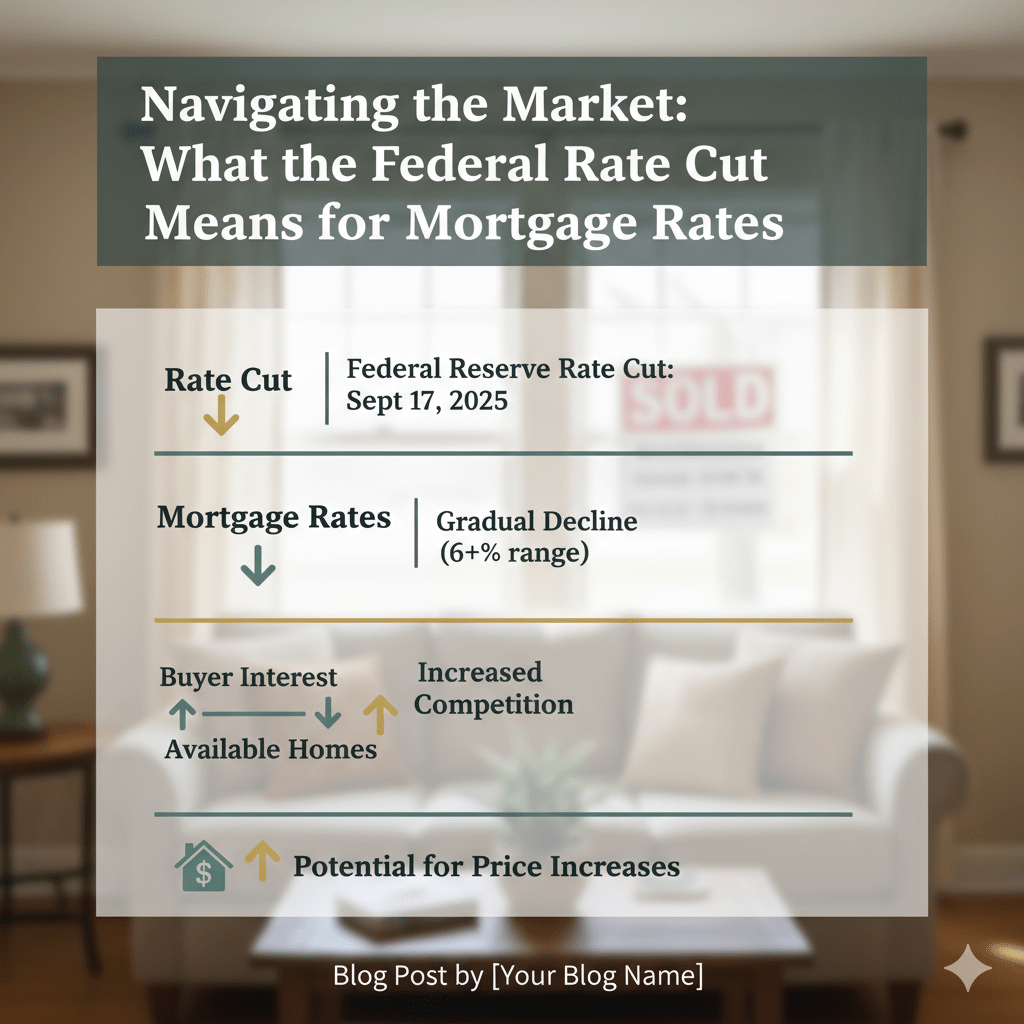
Navigating the Market: What the Federal Rate Cut Means for Mortgage Rates

The Federal Reserve’s recent decision on September 17, 2025, to cut its benchmark interest rate by a quarter-point to a new range of 4.0% to 4.25% has homeowners and prospective buyers wondering about the impact on mortgage rates. While the news is a positive sign for borrowers, the immediate effect on mortgage rates is not as dramatic as you might think.

The Market’s Reaction: A Case of “Anticipation”

The Federal Reserve does not directly set mortgage rates. Instead, mortgage rates tend to follow the yields on long-term government bonds, such as the 10-year Treasury note. In the weeks leading up to the Fed’s announcement, the bond market had already “priced in” the widely expected rate cut. This means that investors’ anticipation of the cut had already driven mortgage rates down. For example, the average rate for a 30-year fixed mortgage had already fallen to an 11-month low of 6.35% last week.

As a result, the immediate impact of the official announcement was minimal. The White House reported that rates fell to their lowest level in three years, and Mortgage News Daily noted that the average 30-year fixed mortgage dropped 12 basis points to 6.13%. However, most of the impact was felt in the weeks leading up to the decision.

The Real Estate Market Outlook

For the housing market, this rate cut is a welcome signal. The decision was driven by concerns over a weakening labor market, which could indicate a “risk management” approach by the Fed to prevent a slowdown.

  • For Homebuyers: While a significant drop in mortgage rates is not expected immediately, the rate cut will likely contribute to a continued, gradual downward trend. This offers some relief and could encourage those who have been waiting on the sidelines to re-enter the market. While buyer interest will likely increase, this demand will intensify competition for available homes, which could push up prices in some areas.
  • For Homebuilders: The rate reduction has a direct, beneficial effect on the interest rates for construction loans. This will help reduce lending costs for builders, potentially leading to more attainable housing supply in the future.

In short, while the Fed’s rate cut is a positive development, it is not a magic bullet that will instantly slash mortgage rates. Instead, it’s a signal that provides downward pressure on rates and could help stabilize the housing market, making it a little more accessible for both homebuyers and builders. Most experts expect mortgage rates to remain above 6% through the end of the year, so if you are ready to buy, it may not be prudent to wait for a significant plunge.

Posted in Homeowners, Sellers

Home Sellers Are Pricing Like It’s 2021

Sellers, Be Careful: Overpricing Could Cost You Big in Today’s Market

As a real estate agent, I’ve seen it time and time again—homeowners clinging to pandemic-era price expectations, setting themselves up for frustration in today’s shifting market.

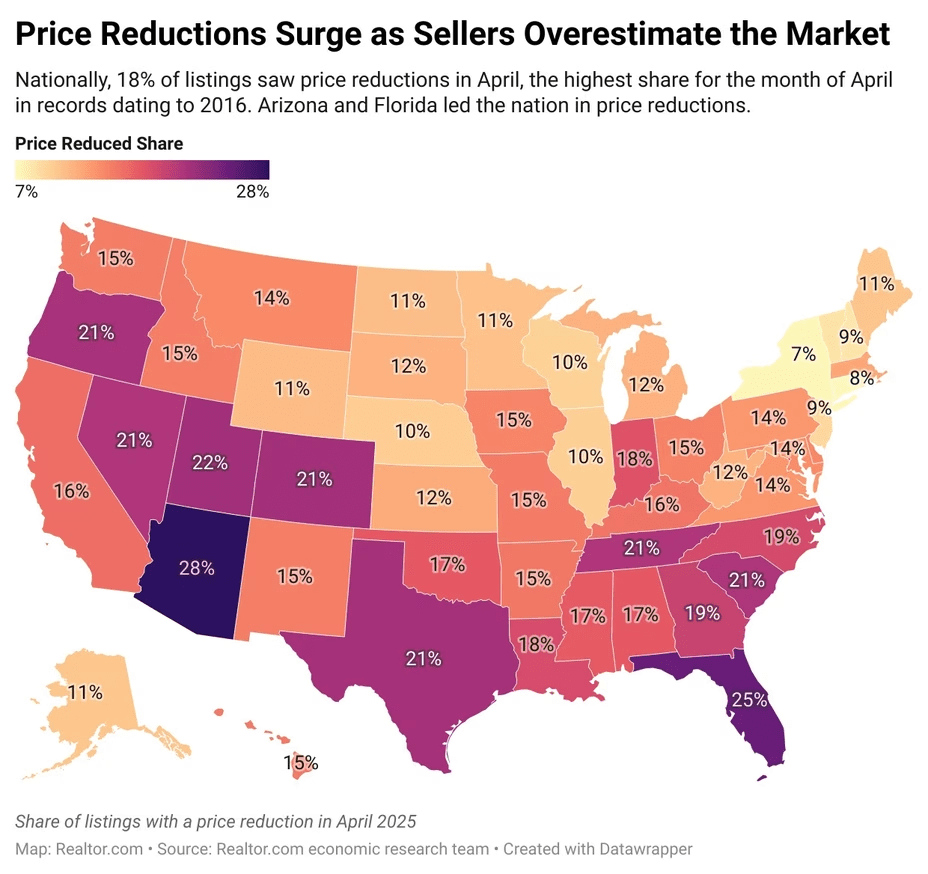
Back in the COVID-19 housing boom, bidding wars and skyrocketing values were the norm. Many sellers who bought during that time are now expecting similar results. But market conditions have changed. Buyer demand has softened, and price cuts are becoming more common. In fact, April saw a record-high share of listings with price reductions nationwide, according to Realtor.com.

Despite this, over 80% of homeowners surveyed still believe they’ll get asking price or more. But homes that are overpriced simply sit—and the longer they sit, the harder they are to sell.

You Still Stand to Win—Just Be Realistic

The good news? Even if you don’t hit your dream number, most sellers still have strong equity gains and can walk away with a solid profit. As Realtor.com Chief Economist Danielle Hale said, “Even after setting a more grounded price, they are likely to walk away from a sale with good money in their pocket.”

Cosmetic Fixes Aren’t a Free Pass to Overprice

One common mistake I see is sellers overestimating the value of minor upgrades. Fresh paint and light fixtures may help your home show better, but they won’t push your price $20K higher. On HGTV, when you landscape and paint, you just added $20,000 to your list, right? But that’s not the way our market is.

Updates help your home sell faster—not necessarily for more. Buyers are looking for real value, like premium locations, or renovated kitchens—not just surface-level improvements.

Price It Right from the Start—or Fall Behind

Overpricing from day one is like starting a marathon 20 miles behind everyone else. Your home lingers, buyers lose interest, and you’re forced to reduce the price later—often multiple times. At that point, your listing can go “stale,” and buyers may wonder what’s wrong with it.

Homes now spend an average of 50 days on the market—four days longer than last year, and the longest April average since 2020. As my colleague Brian Stephens of eXp Realty says, “If you overprice your home, it’s going to sit… and then you’re going to be chasing the price down.”

And it’s not just agents saying this. Even on forums like Reddit, frustrated sellers are sharing stories of regret after listing too high and getting zero offers for months.

Work With Someone Who Tells You the Truth

I always give my clients honest, data-driven pricing advice, no b.s.—even if it’s not what they hoped to hear. In fact, I’ve walked away from listings when sellers refused to adjust their expectations. A successful sale requires trust and a shared goal: to get the home sold for the best possible price in today’s market.

If you’re ready to sell, let’s talk strategy. I’ll help you price right, prepare smart, and move forward with confidence.

Thinking of Selling? Let’s Make a Plan That Works in Today’s Market

Before you list your home, make sure you’re informed, strategic, and confident. Download my free Seller’s Guide to learn what it takes to sell successfully in this market—or reach out directly and let’s discuss a pricing and marketing strategy tailored to your home and goals.

Let’s get your home sold—smart, smooth, and stress-free.
Liz Walker, RE/MAX

Posted in Homeowners, Remodeling, Sellers

5 Home Improvements That Will Add The Most Value When Selling Your Home

Thinking About Selling? These 5 Home Improvements Will Add the Most Value

If you’re a homeowner considering putting your house on the market, you’re probably wondering how to get the highest possible return. The good news? You don’t need a full renovation to make a big impact. Strategic updates—especially in key areas—can significantly increase your home’s value and appeal to potential buyers.

Here are the top 5 improvements that typically deliver the most value before selling:


1. Kitchen Refresh or Remodel

Why it matters: The kitchen is often considered the heart of the home—and buyers agree. An updated kitchen can make or break a sale.

What to do:

  • Repaint or refinish cabinets and countertops for a modern look.
  • Replace outdated hardware, faucets, and light fixtures.
  • Consider stainless steel appliances if yours are dated or mismatched.

ROI: A minor kitchen remodel can recoup 70–80% of its cost, and often more in hot markets.


2. Bathroom Upgrades

Why it matters: Buyers want clean, functional, and modern bathrooms. Even small improvements can make a big difference.

What to do:

  • Re-caulk tubs, showers, and sinks.
  • Replace old vanities, mirrors, and light fixtures.
  • Install new faucets and towel bars for a fresh, cohesive look.
  • Ensure plumbing and ventilation are in good working order.
  • Paint a dated, colored cast iron tub or sink white

ROI: Midrange bathroom updates typically recoup 60–70% of their cost.


3. Curb Appeal Enhancements

Why it matters: First impressions count. Buyers often form an opinion before they even step inside.

What to do:

  • Paint or replace the front door.
  • Clean up landscaping, trim bushes, and plant seasonal flowers.
  • Power-wash the exterior, walkways, and driveway.
  • Fix cracked concrete or damaged siding.

ROI: Basic landscaping and exterior upgrades can return 100% or more in perceived value.


4. Fresh Interior Paint

Why it matters: A fresh coat of paint is one of the most cost-effective ways to give your home a clean, updated look.

What to do:

  • Use neutral, light colors to appeal to the widest range of buyers.
  • Paint over bold or personalized colors that might turn off buyers.
  • Don’t forget to touch up baseboards, trim, and ceilings.

ROI: Painting can yield a 100%+ return, especially when covering outdated or damaged surfaces.


5. Flooring Updates

Why it matters: Old carpet, scratched hardwood, or outdated tile can drag down your home’s appeal.

What to do:

  • Replace worn carpet with midrange options or consider luxury vinyl plank (LVP), which is affordable, stylish, and durable.
  • Refinish hardwood floors rather than replacing them.
  • Fix squeaks, stains, and loose boards.

ROI: Flooring updates can deliver 70–80% ROI and drastically improve the overall feel of the home.


Bonus Tip: Declutter and Stage Smartly

Beyond physical improvements, a clean and well-staged home can help buyers envision themselves living there. Remove excess furniture, personal items, and clutter to make spaces feel larger and more inviting.


Want to Know What Your Home is Worth?

Before you invest in any upgrades, it’s a smart idea to understand your home’s current market value.
👉 Click here to use my free home valuation tool and get an instant estimate!


Final Thoughts

Every market is different, so it’s a smart idea to talk with a local real estate professional before making major upgrades. But generally, these five improvements offer some of the best bang for your buck. A few smart investments can lead to a quicker sale—and a higher price.

Ready to make your move? Start with a plan, prioritize these upgrades, and you’ll be well on your way to a successful sale.

Posted in Uncategorized

Why Some Homes Sell Faster Than Others

Why Some Homes Sell Faster Than Others

As you think ahead to your own move, you may have noticed some houses sell within days, while others linger. But why is that? As Redfin says:

That may leave you wondering what you should expect when you sell. Let’s break it down and give you some actionable tips on how to make sure your house is one that sells quickly.

Homes Are Still Selling Faster Than Pre-Pandemic

The first thing you should know is that, in most markets, things have slowed down a little bit. While you may remember how quickly homes sold a few years ago, that’s not what you should expect today.

By this comparison, if your house does take a little more time to sell this year, it’s not really a concern. It’s actually still faster than the norm. Plus, it gives you a bit more time to find your next home, which is welcome relief when you’re trying to move, too.

Just remember, some homes sell in less time than this. Some take even longer. So, what’s the real difference? Why do some homes attract eager buyers almost instantly, while others sit and struggle?

It comes down to having the right agent and strategy. Here are a few tips you need to know. 

1. Price It Right

What to do: Work with an agent that will stick to their pricing strategy and not agree to your higher price plans. I’ll analyze recent comparable sales (what other homes have sold for recently in your area plus compare the condition of the home to yours), so you know you’re pricing appropriately for today’s market and what buyers are willing to pay. As Chen Zhao, Economic Research Lead at Redfin, explains:

2. Focus on the First Impression

A messy yard or a house that needs paint? It’ll turn buyers off. Since buyers decide within seconds whether they like a home, a good first impression is key.

What to do: Outside, clean up your front yard, tidy up your landscaping, power wash walkways, and add fresh mulch. Inside, declutter and depersonalize. And consider minor touch-ups like repainting in a neutral tone. I will offer advice on what to prioritize based on your budget.

3. Strong Marketing & High-Quality Listing Photos

If your listing or your photos don’t look professional, you could have trouble drawing in buyers who think you’re trying to cut corners.

I Offer: 

  • High-resolution, edited listing photos showing the home in its best light.
  • 2-D Floor Plans, 3-D Interactive Floor Plan, Video Tours
  • Aerial Photography
  • Detailed descriptions that highlight SEO features of your house.
  • Your listing on multiple platforms, including major real estate sites
  • Paid and Targeted Social Media Advertising

4. The Location of the Home

You may have heard the phrase “location, location, location” when it comes to real estate. And there’s definitely some truth to that. Homes in highly sought-after neighborhoods tend to sell faster.

What to do: While you can’t change where your house is located, I can highlight the best features of your neighborhood or community in your listing. By showcasing what’s great about your area, they can help draw buyers into what life would look like in your house.

Bottom Line

Homes that sell quickly don’t necessarily have better features – they have better agents and a better strategy.

Are you thinking about selling? Let’s talk about how to get your home sold quickly and for top dollar.

Posted in Buyers, Homeowners, Remodeling, Sellers

The Inexpensive Power of Paint

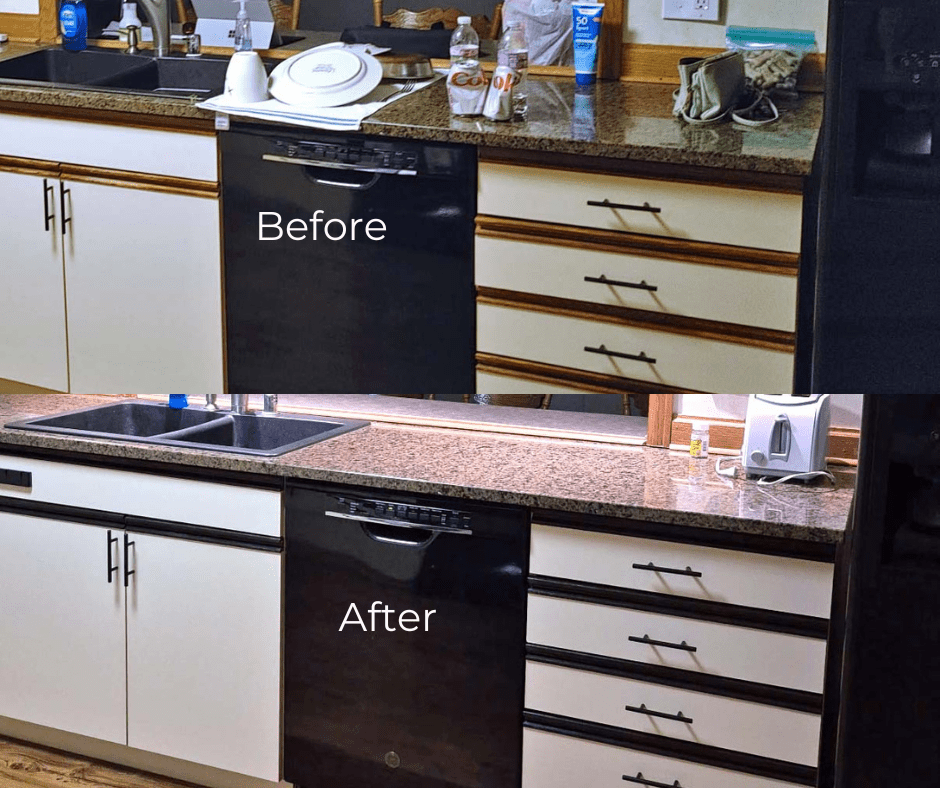
It’s amazing what a little bit of paint can do to transform a dated kitchen! It was such an inexpensive transformation. All it took was a quart of paint and a couple of hours of labor. I’m going to pat myself on the back here because it was my suggestion. I sold the owner the home about a year ago. I stopped in this week to catch up with her and she showed me all the improvements she made. When we got to the kitchen she asked me my opinion on the cabinets as she was thinking of painting everything.

This kitchen has 1970’s style cabinets. Originally they were mostly white but with some light wood trim accents which gives it that dated look. All the appliances are black and the stone countertop has black flecks in it as well as having black cabinet hardware. So it was an easy suggestion to paint that wood trim black. The whole look changed from the dated 70’s to a modern black and white trend.

I love to chat with clients who are working through remodeling. Feel free to reach out to me if you want to bounce some ideas around on a project you are working on. I’ve been in hundreds of homes and have seen some pretty clever ideas to handle all sorts of issues. Paint tends to be the cheapest and easiest fix to dated bathroom fixtures, wood paneling, and kitchen countertops and cabinets. It certainly beats the expense of complete replacements if you don’t plan on staying in the home for a long time.