

Posted in Buyers, Homeowners, Sellers

The Risks of Waiving a Home Inspection

A home inspection is a crucial safeguard for your financial future, ensuring you’re fully informed before making one of the biggest purchases of your life. An inspection can uncover major issues—like faulty wiring, hidden water damage, or structural problems—that could cost tens of thousands to repair.

Beyond financial concerns, inspections are also critical for safety. They can identify hazards like unsafe heating systems, mold, or electrical work that might cause a safety risk and not be visible during a walk-through.

A home inspection is a few hundred dollars for peace of mind. That’s far better than spending thousands later on unexpected repairs.

Should You Ever Waive a Home Inspection?

Sellers may prefer offers without an inspection contingency because it reduces the risk of last-minute renegotiations. In a competitive market, some buyers waive inspections to speed up closing and make their offers more attractive.

While I never recommend skipping an inspection, one compromise is to include an “informational-only” inspection clause in your contract. This allows you to complete an inspection but removes the expectation that the seller will make repairs.

“If major issues arise, you can still back out,” Rosalia says. “You may lose your earnest money, but that might be a small price to pay compared to the cost of unexpected repairs.”

Should You Waive an Inspection for a Recently Built Home?

Some real estate professionals argue that if a home is new or if the seller provides a recent inspection report, waiving the inspection might be a reasonable risk. However, I advise my buyers to think of it like buying a used car—you wouldn’t purchase one without having a mechanic check it first.

Many assume that new construction means fewer issues, but that’s not always the case. I had a buyer that bought a recently built home that waived the home inspection only to discover once she owned the home that the foundation settled incorrectly causing a water intrusion problem. There was also a wiring problem with the electrical panel that caused several outlets and switches not to work.

Is It Ever OK to Waive an Inspection?

Experienced investors or home flippers with construction experience and a sizable repair budget might be willing to waive an inspection, but for most buyers, it’s simply not worth the risk.

The Bottom Line

Spending a few hundred dollars on a home inspection is almost always money well spent. At the very least, it provides a useful 5yr home maintenance guide and helps buyers understand potential future repairs.

If you’re in the market for a home in Juneau County and the surrounding area I am here to help. I have several home inspectors that I’ve worked with that I can recommend to give you peace of mind when purchasing a property. With years of experience in the real estate industry, I ensure my clients make informed decisions—without unnecessary risks.

Posted in Buyers, Homeowners, Sellers

Sellers, Don’t Fear Government Loans

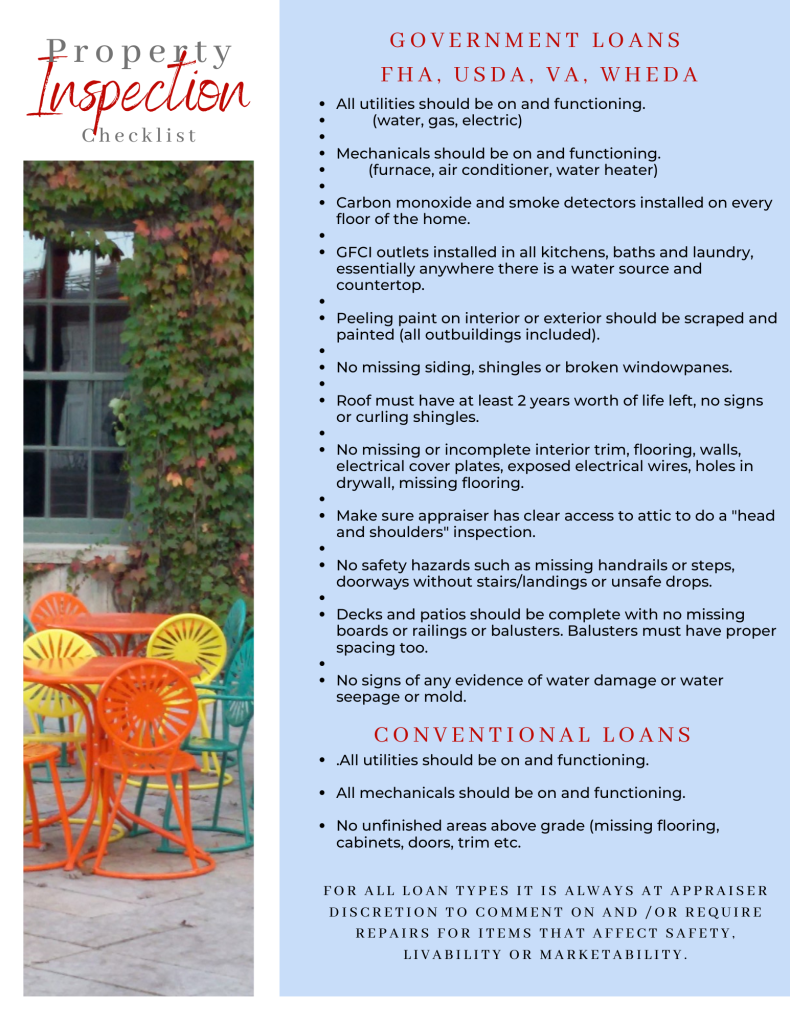
I think one of the biggest fears for sellers is a buyer that is pre-approved for a government loan program. This fear is not based on the ability of the buyer to have sufficient finances to obtain the loan but rather on the possible reasons the home could be denied for the loan. Yes, you read that right, the home can be denied.

Let me say though that with the hundreds of transactions I’ve handled, very rarely does an offer to purchase fall through due to the condition of the home. Generally, there are some basic repairs that need to be made but the seller and buyer can negotiate how to get that done. One recent case, three steps outside a home needed a handrail. I was working with the buyer and I suggested to them that they offer to build it themselves before closing. The seller was a single woman who was not in a great financial position to hire someone to get the job done. The buyer on the other hand was a couple with some basic skills so they built the handrail themselves in a matter of days.

I’ve had buyers willing to paint or scrap paint off decks. Oddly enough paint stripped off wood is fine for government loans, you just can’t have peeling paint. Other times the buyers swapped traditional outlets with GFCI outlets. For the person with the right skill set, the list of possible issues really are pretty minor things. Sellers shouldn’t fear the possiblility of repairs because a willing buyer just might do the work for you.

Posted in Buyers

Why You Need a Home Inspection

Avoid Unwelcome Surprises

A home inspection is an objective visual examination of the physical structure and systems of a home, from the roof to the foundation. If problems or symptoms are found, the inspector may recommend further evaluation.

WHY HAVE A HOME INSPECTION? The purchase of a home is probably one of the largest single investments you will make. It is important to know about any major repairs before you buy so that you can minimize unpleasant surprises and difficulties.

WHAT WILL MY HOME INSPECTION INCLUDE? The standard home inspector’s report will review the present condition of the home’s heating and cooling system, interior plumbing and electrical systems, the roof, attic and visible insulation, walls, ceilings, floors, windows, doors, the foundation, basement and visible structure. Most inspectors will provide you with an on-the-spot written report detailing their observations. The home inspector is usually contacted as soon as the Offer To Purchase has been accepted.

SCHEDULING A HOME INSPECTION:HOW LONG WILL AN INSPECTION TAKE? Most Offer contracts allow for 10-15 days from acceptance for the inspection contingency. A home inspection on an average size home will typically take from 2-3 hours. Large homes and any testing will add some time. Your inspector will recap the inspection with you and point out any areas of concern. Be sure to ask your home inspector, in advance, what type of report will be issued and when it will be provided to be sure you will be able to meet any contractual deadlines.

WHAT WILL A HOME INSPECTION COST? Most are in the $300-$500 range. If additional testing (such as testing for radon or lead basedpaint) is requested in your offer to purchase, there will be an additional cost.