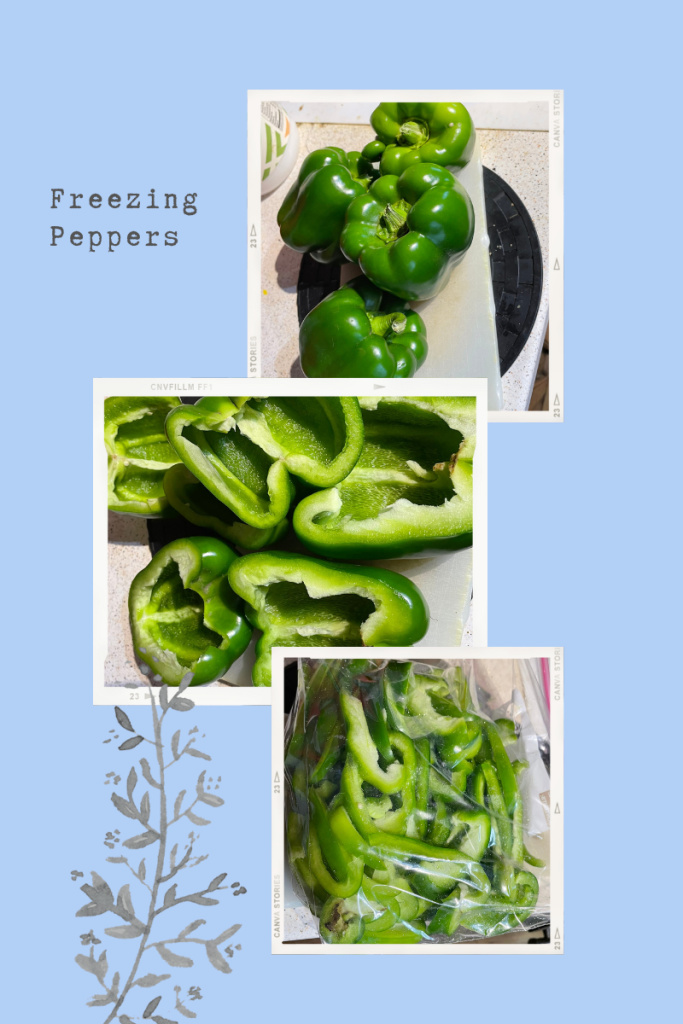
Peppers are the simplest garden vegetable to preserve! It literally takes just a few minutes to put a years worth of peppers in your freezer. Ready for it…. Wash, slice and put in a freezer bag. That’s it! No need to blanch them before freezing and certainly don’t bother canning them.
The frozen peppers are perfect for adding to soup, casseroles or in my household I use them most in jambalaya. Freezing them does change the structure a bit, they lose their crunch but who cares when you cook them anyways. You don’t even need to grow these yourself. If you see peppers on sale in the grocery store or there is an abundance at the farmer’s market put some in your freezer. You’ll avoid that $4.99/lb price in the dead of winter and you will conveniently have them on hand.
Maintaining a garden can be a lot of work! Weeding, watering, and fertilizing for 3-4 months requires weekly hands on work. I try to work smarter, not harder so my method of gardening incorporates many facets into one task, mulching. I’m not talking about using landscape fabric. Using fabric is great at keeping the weeds out but it also causes soil compaction while eliminating healthy bugs like worms and nutrients you get from composting organic materials.
I like to mulch with things like newspaper, cardboard, grass clipings, and leaves. All of these items become compost food for worms. The worms break them down which then provides nutrients for the plants and improves the soil. As a surface barrier the mulch is holding in moisture (so less watering needed) and detering weed growth. Best of all, at the end of the harvest season it can be tilled into the soil right along with the dead garden plants. This is eliminates the need to add fertilizer. Bonus feature, these items are free!
This is how I build my mulch layer. Row crops like tomatoes and onions get surrounded by a layer of cardboard then topped with heaping piles of grass. The cardboard suppresses weeds, holds in moisture while the grass keeps the cardboard from blowing away. Make sure the cardboard is free of colored ink and wax coating. I use shredded newspaper for crops that aren’t in nice rows, like my strawberry patch. You can sprinkle the shredded paper around individual plants and top with grass. Newspapers should also be the basic black ink, avoid the colored ad inserts.
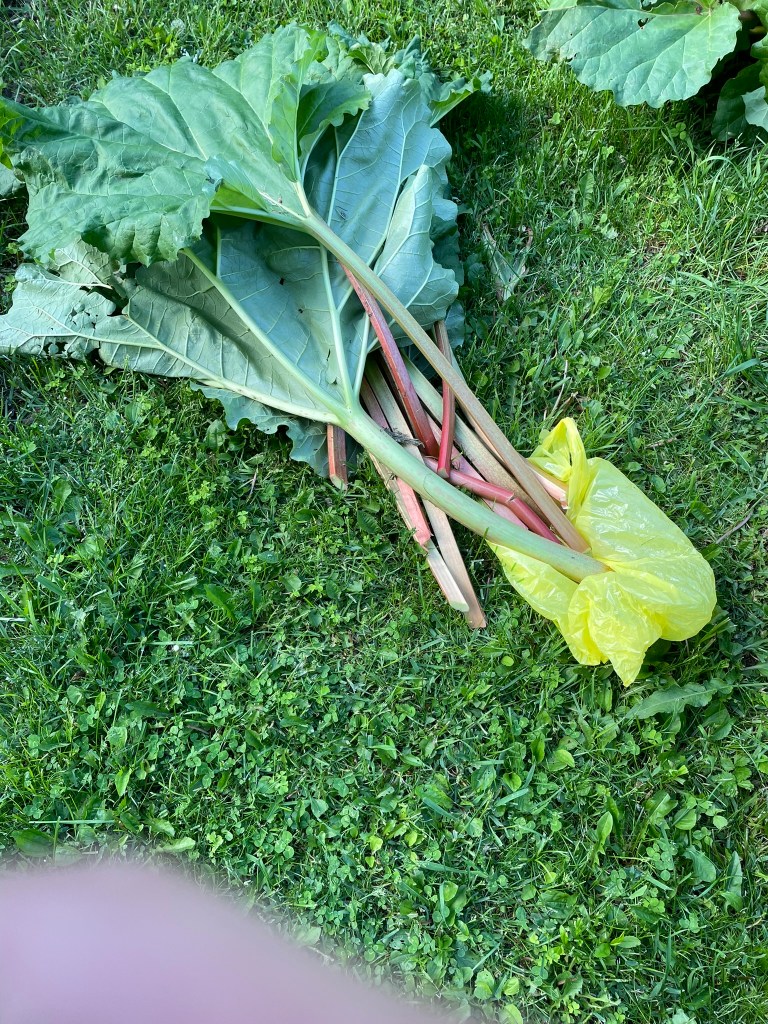
I also use other things for mulch like the leaves of rhubarb. They are huge! Plus you can tear the leaves to make it easier to wrap them around plant stems. Don’t worry, they may be poisonous to eat but they are perfectly fine to use as compost or mulch. In the Fall I will rake leaves from the surrounding trees to help cover the garden for the winter and come Spring what’s left will get tilled into the soil. This whole process is an organic way of gardening. I don’t need to add fertilizer and the organic items I’ve added to the soil also help to maintain moisture. This is working smarter, not harder plus I’m feeding the family food that is free from chemicals.
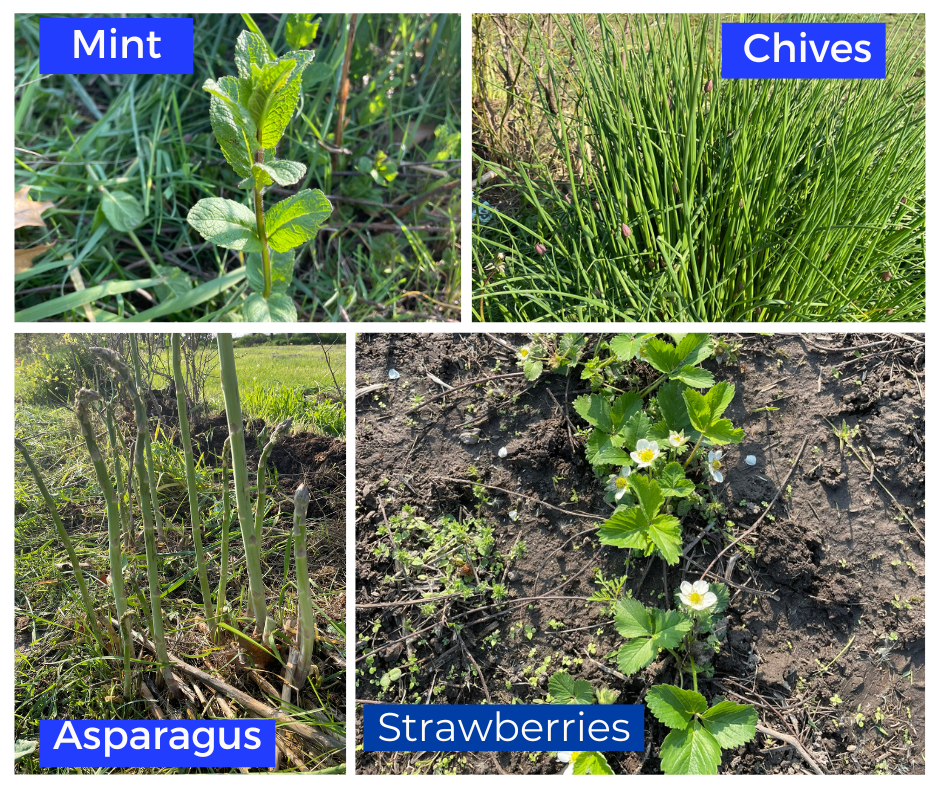
I’m fortunate that my garden has been in the same spot for the last 20+ years. It has allowed me to slowly add perennial plants so that at this point I am harvesting asparagus, blueberries, chives, mint, raspberries, and strawberries for “free,” an yes, there is a little bit of labor involved every year to pull weeds, prune or transplant new strawberry sprouts.
Asparagus is one of the few plants that is ready to harvest at the beginning of the planting season. The pictures above are the plants that are currently peeking up in my garden. I started picking the asparagus near the beginning of May and it probably has just a couple of weeks left to harvest. The local grocery store is currently selling it for $3.49/lb. You can buy the asparagus bare roots for $15 or less. It may take 2-3 years before the first harvest but the roots will sprout every year, indefinitely with no additional work from you.
Food is so expensive, right? This is a constant topic among all demographics of people I interact with. I’ve come to realize that I take my “life skills” for granted by thinking everyone shares the same knowledge I do. Now I’m not stating I’m at expert at anything but growing up on a farm did drill home some pretty basic concepts to feed a family. Farmers by nature are frugal of course and they have the land for a large family garden. So over the course of the next 6 months of my gardening I’ll post some ideas to help those of you try to save a little bit on that grocery bill.
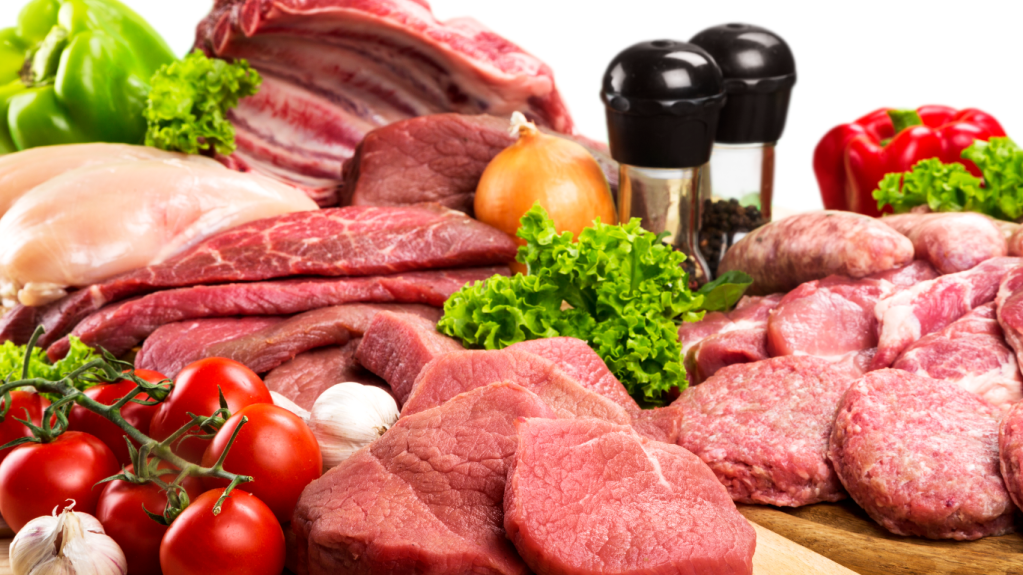
MEAT – I’ll start with this one first since it doesn’t fall under the gardening category. This is the biggest expense in the grocery store. In order to save money you have to think differently about how you buy it. I rarely pay full price for any package of meat. I don’t meal plan, write a grocery list and go buy those items. Instead, I shop the sale items I see when I walk through the store. Typically there is a 6-8 week rotation of sales. So if chuck roast is on sale today it might be another 6-8 weeks before it’s on sale again. When it’s on sale I might purchase 2 roasts so at least 1 goes into the freezer to be used in the next few weeks before it goes on sale again.
Buy meat in bulk if you can to save even more. We typically buy a side of beef from the local butcher but stores often have great savings on bulk packages. If hamburger in a 10 lb package is cheaper than a 2 lb package, buy the 10 lbs and then repackage it into 5 smaller portions and put them in the freezer.
Chicken packaging these days is bizarre! It’s difficult to find a store that will sell you a whole bird. You can get a package of legs, wings, or breasts but none of them combined in one package. I have a family that is split on the white meat/dark meat preference so I need both. You can buy 3 breasts, 4 leg quarters or a dozen wings but not just the parts of one bird. It just doesn’t make sense! The answer is to buy a package of each, combine and divide into two bags with both cuts of meat. One of those bags goes into the freezer.
The concept is to slowly build up a reserve of meat in your freezer so you have multiples of the same things and all items were bought on sale. This might take 6 months to a year depending on how much space and budget you have. The end result is I make dinner from what I bought on sale.

 Liz Walker Real Estate