A home inspection is a crucial safeguard for your financial future, ensuring you’re fully informed before making one of the biggest purchases of your life. An inspection can uncover major issues—like faulty wiring, hidden water damage, or structural problems—that could cost tens of thousands to repair.
Beyond financial concerns, inspections are also critical for safety. They can identify hazards like unsafe heating systems, mold, or electrical work that might cause a safety risk and not be visible during a walk-through.
A home inspection is a few hundred dollars for peace of mind. That’s far better than spending thousands later on unexpected repairs.
Should You Ever Waive a Home Inspection?
Sellers may prefer offers without an inspection contingency because it reduces the risk of last-minute renegotiations. In a competitive market, some buyers waive inspections to speed up closing and make their offers more attractive.
While I never recommend skipping an inspection, one compromise is to include an “informational-only” inspection clause in your contract. This allows you to complete an inspection but removes the expectation that the seller will make repairs.
“If major issues arise, you can still back out,” Rosalia says. “You may lose your earnest money, but that might be a small price to pay compared to the cost of unexpected repairs.”
Should You Waive an Inspection for a Recently Built Home?
Some real estate professionals argue that if a home is new or if the seller provides a recent inspection report, waiving the inspection might be a reasonable risk. However, I advise my buyers to think of it like buying a used car—you wouldn’t purchase one without having a mechanic check it first.
Many assume that new construction means fewer issues, but that’s not always the case. I had a buyer that bought a recently built home that waived the home inspection only to discover once she owned the home that the foundation settled incorrectly causing a water intrusion problem. There was also a wiring problem with the electrical panel that caused several outlets and switches not to work.
Is It Ever OK to Waive an Inspection?
Experienced investors or home flippers with construction experience and a sizable repair budget might be willing to waive an inspection, but for most buyers, it’s simply not worth the risk.
The Bottom Line
Spending a few hundred dollars on a home inspection is almost always money well spent. At the very least, it provides a useful 5yr home maintenance guide and helps buyers understand potential future repairs.
If you’re in the market for a home in Juneau County and the surrounding area I am here to help. I have several home inspectors that I’ve worked with that I can recommend to give you peace of mind when purchasing a property. With years of experience in the real estate industry, I ensure my clients make informed decisions—without unnecessary risks.
It’s surprising how often it happens, but sometimes a property just doesn’t attract buyers. Sellers may frequently ask, “Why isn’t my property selling?”. It’s important to remember that this occurs even with experienced agents and desirable homes. Fortunately, there are many potential reasons a property remains unsold, and it’s not always solely about the list price. Before resorting to a significant price drop, consider these other possible challenges and their potential solutions.
1. Suboptimal Property Characteristics
Research indicates that a substantial portion (approximately 60%) of owner-occupied residences in the United States were constructed before 1980. Certain regions have an even higher average age for homes; for instance the majority of homes built in cities like New Lisbon were built before 1970. Many of these older dwellings may lack features that are currently favored by buyers, such as generously sized bedrooms, a master bathroom, higher ceilings, multiple bathrooms, or multi-car garages. These factors can deter potential buyers from even scheduling a visit. Interestingly, sometimes newer properties built with basic materials can be more challenging to market than older homes that possess unique architectural details.
Possible Solutions:
To identify issues, I assess the property from the perspective of a modern buyer. Determine which of its attributes might be considered outdated. In some instances, sellers can address these issues through minor updates or renovations. If homeowners are unable or unwilling to modify certain problematic features, I can propose alternative strategies, such as a price reduction or offering a buyer incentive to offset the specific drawback.
2. Obvious Deficiencies in Condition
If a property appears to require significant upkeep, many prospective buyers will avoid it. Accumulating minor maintenance needs, like peeling paint, a neglected yard, or worn flooring, can be discouraging. More substantial and noticeable problems, such as unusual property layouts or outdated plumbing and electrical systems, can significantly hinder the selling process. In extreme situations, these issues can even make it difficult for buyers to secure financing.
Possible Solutions:
I would identify and clearly explain how specific deficiencies can impede a sale and offer recommendations for repairs, renovations, and property staging.
3. Inappropriate Pricing or Excessive Costs
Another frequent cause of properties not selling is simply financial: the price. Setting an excessively high price can deter potential buyers and result in a listing that remains on the market for an extended period without generating interest. Conversely, sellers and agents sometimes fail to adequately consider supplementary costs when determining the property’s price, such as homeowner association (HOA) dues, mortgage interest rates, and closing expenses. These factors influence a buyer’s affordability and, consequently, the property’s attractiveness.
Possible Solutions:
Given that most buyers carefully evaluate their potential monthly housing expenses, explore ways to adjust the price or suggest solutions to make payments more manageable. If the current interest rates are a deterrent the seller can offer a credit to the buyer to “buy down” their interest rate, meaning they will prepay interest to get a permanent rate reduction.
4. Real Estate Market Dynamics
When dealing with a property that isn’t selling, it’s essential to analyze the prevailing real estate market conditions. Various market factors can affect the sale of a home, including an oversupply of properties (a buyer’s market), economic downturns, and seasonal variations. Furthermore, local market influences can diminish the appeal of individual properties, such as the absence of convenient access to quality schools, changes in nearby businesses or industries, or even ongoing construction in the vicinity.
Possible Solutions:
Unfortunately, neither sellers nor agents can control the overall real estate market. However, gaining a deeper understanding of market trends and adopting a flexible approach is crucial. While overcoming a challenging market entirely may not be possible, you can improve the likelihood of a sale by adjusting pricing strategies, enhancing the property’s presentation, or employing creative property descriptions.
5. Inadequate Communication
Communication, though fundamental, is a significant factor in why properties fail to sell. Both the listing agent and the seller share responsibility for maintaining open and honest communication regarding the property, their expectations, concerns, and inquiries. When important details or questions are left unresolved or unaddressed, the property may be marketed ineffectively, leading to a lack of buyer interest or offers.
Possible Solutions:
Ideally, I initiate the selling process with a comprehensive presentation that sets the stage for a successful transaction so the seller knows what to expect or forsee as potential problems.
This presentation should include a market overview, staging advice, a comparative market analysis, and a clear explanation of the marketing plan.
It should also facilitate an open dialogue about the property’s condition, potential obstacles, and how to interpret feedback from marketing efforts, showings, and buyer agents.
6. Ineffective Marketing Strategies
When there are no apparent issues with the property itself or the broader real estate market, homeowners are more inclined to wonder, “Why isn’t my property generating interest?” If a property isn’t attracting sufficient attention, the marketing approach may not be as effective as it could be. It’s important to remember that even highly skilled and experienced agents can encounter this situation. Often, a minor adjustment or refinement can make a substantial difference.
Possible Solutions:
If I suspect a problem with the property’s marketing, I begin by evaluating the process as if I were a buyer’s agent searching for a similar property. If the listing appears correctly, I consider modifications to the descriptive text to boost terms used in search engines or exploring additional strategies to increase its visibility. For example, try incorporating more descriptive language into the listing description, revaluating the possible target market, or re-editing short-form videos for social media platforms
7. Poor-Quality Property Photography
Although property photography is a component of marketing, it warrants separate consideration due to its significant influence on whether a property sells. Listing photos serve as the primary point of interaction between potential buyers and the property, and inadequate photos can often cause buyers to dismiss a listing without further consideration. Photos should be high-resolution, well-lit, and captured from optimal angles. This professional presentation conveys a sense of cleanliness, freshness, and move-in readiness.
Possible Solutions:
If the seller used an agent that didn’t use a professional camera and digital editing the initial listing photos may end up subpar. Investing in a professional photographer to reshoot the property or utilizing virtual staging tools can be worthwhile . Decluttering rooms and the year to avoid including images that depict cluttered spaces, busy streets, utility lines, small or unkempt yards, or any other elements are worthwhile to improve buyers interest.
8. Property Staging and Exterior Presentation
If a property isn’t selling despite addressing the more obvious factors (price, market conditions, property quality), it may be time to concentrate on its visual appeal. Real estate data suggests that staged homes can increase the amount of money offered. While staging and landscaping don’t alter the property’s fundamental value, they can significantly enhance its attractiveness and potentially influence the final sale price.
Possible Solutions:
There are various ways to improve a property’s exterior presentation and interior staging.
Hiring a professional stager can yield the most effective results, though it can be costly.
Implementing simple staging techniques, such as decluttering and incorporating mirrors, can make a notable difference.
Similarly, basic landscaping improvements, like pruning bushes and adding container plants, can substantially enhance curb appeal.
As the peak period for residential home sales approaches, prospective buyers may encounter a broader selection of properties and increased search flexibility. This development should make it easier to buy for those who have previously struggled to locate a residence that aligns with their specific requirements.
The balance of negotiation leverage between buyers and sellers may be relatively even at present. This time last year, the market favored sellers. Currently, as the spring season commences, the market is more equal between buyers and sellers depending on the property.
It is essential to recognize that local market conditions can vary significantly, depending on what type of property you are buying. Vacation home sales are still going strong, while the local residential housing market is still a challenge for first time home buyers because there are limited properties available in the $150,000 – $250,000 price point. Here is a summary of general market trends and guidance for the upcoming months.
When does the primary period for residential real estate transactions begin?
The majority of sellers in WI typically list their properties during the spring season, starting with the spring rise in temperatures and reaching its peak in late May and early June. This timing aligns with the influx of purchasers, many of whom aim to finalize their relocation during the summer months when schools are in recess. The convergence of increased seller activity and purchaser interest characterizes spring as the most active period.
Will competitive pressures diminish in 2025?
The real estate sector is subject to seasonal fluctuations, with spring typically marking a period of heightened activity. However, fluctuations in mortgage interest rates, which have exhibited volatility over the past two years, also influence market dynamics. Decreases in interest rates tend to stimulate buyer activity, while rate increases tend to lower demand.
The average days on market for a single family home was near 3 months in the first quarter of 2025. This is double the previous year days on market of 1.5 months. It is noteworthy that competitively priced properties still tend to sell fast. I believe there has been a trend among sellers to list their property higher than the market comparisons would dictate. Sellers are still under the impression that home prices are rising quickly as happened during the Covid years but this is no longer true. The real estate market has returned to normal.
Our nation’s political climate and economy is certainly playing a large part in the movement of real estate. Buyers and sellers have been overly cautious since before the presidential election last year which has made market activity stagnant. The market isn’t crashing but it’s not quickly rising either.
Will a greater selection of affordable properties be available?
The availability of affordable properties is contingent upon individual budget constraints and local market conditions. The number of homes sold in 2024 hit a 30 year low. However, generally, experts are anticipating an increase to inventory during this spring over last year but it will be a small increase..
Will interest rate drop this year?
Consumers shouldn’t wait for interest rates to drop. The expectation is that rates will remain in the mid 6% range throughout most of the year. Economists don’t expect mortgage rates to drop below 6% this year at all. The low rates from the last five years are a thing of the past so don’t wait to make a move based on a low mortgage rate. More concerning will be the rising costs of building materials as the need for new home construction due destruction from flooding, hurricanes and wildfires. New home prices and the costs to remodel are going to continue to rise so don’t wait for the perfect time to make a move.
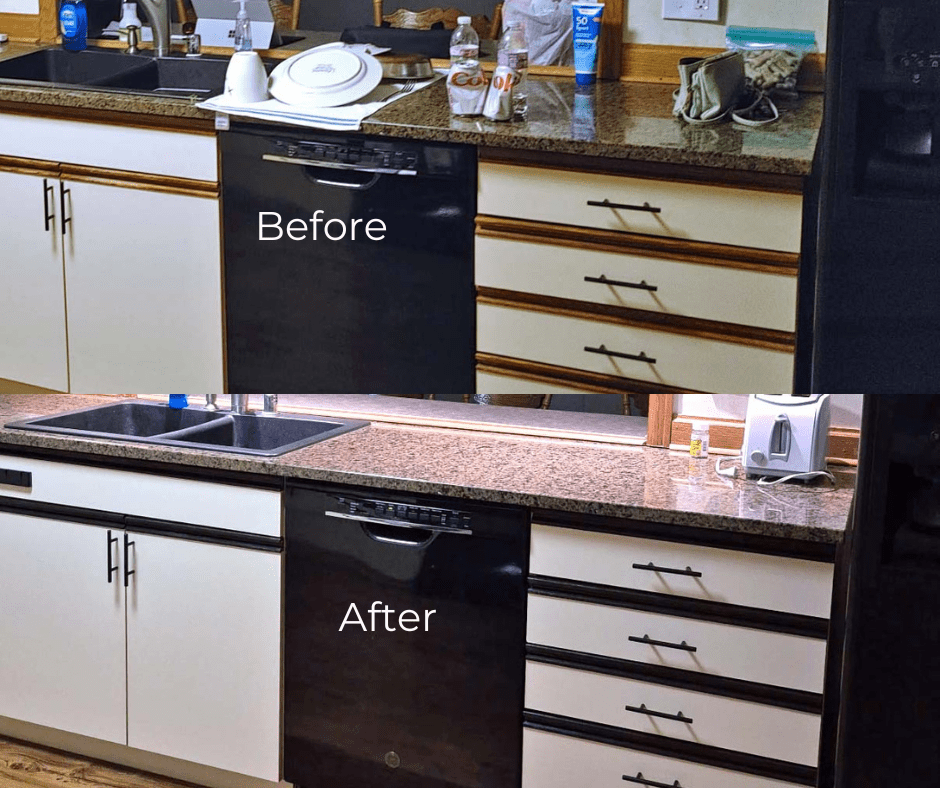
It’s amazing what a little bit of paint can do to transform a dated kitchen! It was such an inexpensive transformation. All it took was a quart of paint and a couple of hours of labor. I’m going to pat myself on the back here because it was my suggestion. I sold the owner the home about a year ago. I stopped in this week to catch up with her and she showed me all the improvements she made. When we got to the kitchen she asked me my opinion on the cabinets as she was thinking of painting everything.
This kitchen has 1970’s style cabinets. Originally they were mostly white but with some light wood trim accents which gives it that dated look. All the appliances are black and the stone countertop has black flecks in it as well as having black cabinet hardware. So it was an easy suggestion to paint that wood trim black. The whole look changed from the dated 70’s to a modern black and white trend.
I love to chat with clients who are working through remodeling. Feel free to reach out to me if you want to bounce some ideas around on a project you are working on. I’ve been in hundreds of homes and have seen some pretty clever ideas to handle all sorts of issues. Paint tends to be the cheapest and easiest fix to dated bathroom fixtures, wood paneling, and kitchen countertops and cabinets. It certainly beats the expense of complete replacements if you don’t plan on staying in the home for a long time.
I think one of the biggest fears for sellers is a buyer that is pre-approved for a government loan program. This fear is not based on the ability of the buyer to have sufficient finances to obtain the loan but rather on the possible reasons the home could be denied for the loan. Yes, you read that right, the home can be denied.
Let me say though that with the hundreds of transactions I’ve handled, very rarely does an offer to purchase fall through due to the condition of the home. Generally, there are some basic repairs that need to be made but the seller and buyer can negotiate how to get that done. One recent case, three steps outside a home needed a handrail. I was working with the buyer and I suggested to them that they offer to build it themselves before closing. The seller was a single woman who was not in a great financial position to hire someone to get the job done. The buyer on the other hand was a couple with some basic skills so they built the handrail themselves in a matter of days.
I’ve had buyers willing to paint or scrap paint off decks. Oddly enough paint stripped off wood is fine for government loans, you just can’t have peeling paint. Other times the buyers swapped traditional outlets with GFCI outlets. For the person with the right skill set, the list of possible issues really are pretty minor things. Sellers shouldn’t fear the possiblility of repairs because a willing buyer just might do the work for you.
Home buyers make the decision to schedule a showing based on what images or media of a property is available online. That means that the photos and videos available to them can make or break the interest they have in your property. Most list agents use their cell phone to take photos and that’s it. No photo editing to enhance the images, no video tour, or aerial photography. Or maybe they add a “virtual tour” which in reality is just the photos they took clipped together in video format.
Now imagine being able to view your property in 3D with the ability to “move” throughout the home and turn the view you see. Check out what I mean by clicking this link. It’s a 3D Tour of our RE/MAX RealPros office.
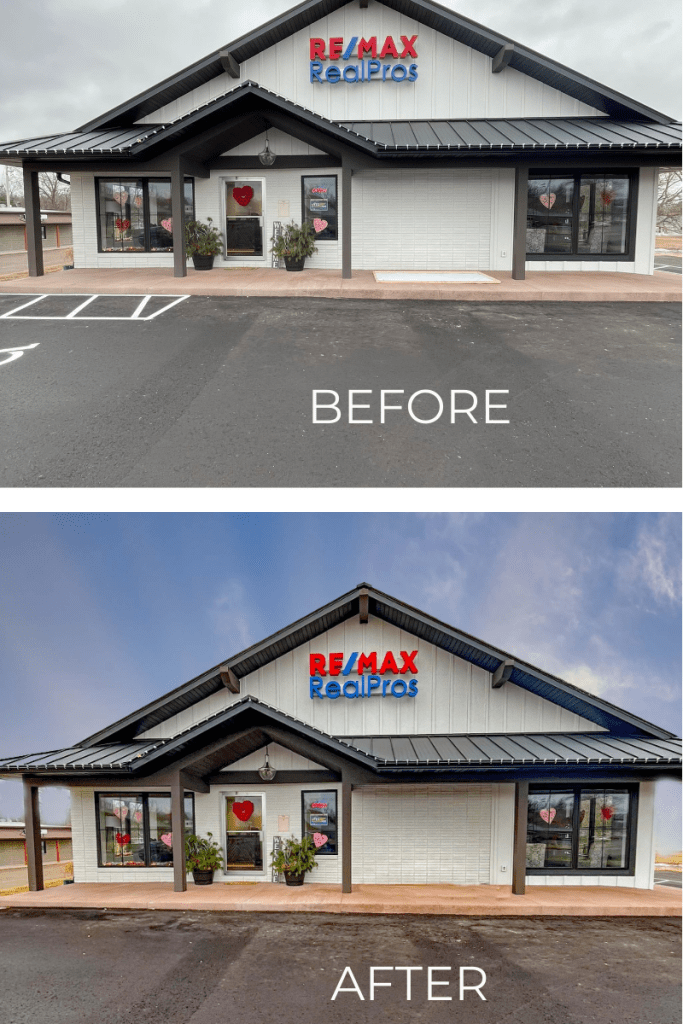
Wow factor right? Don’t settle for an agent that just takes cell phone photos. You deserve someone that has invested in technology so you get the most robust marketing possible. Take a look at the before and after photos below. Notice how the Before photo was taken on a gray, cloudy day. In the After photo I’ve brightened the sky, removed some distractions like the white lines on the parking lot, the white square on the front stoop and the trees in the background. Your eye is drawn to the our office building and not distracted by the clutter around it.
Your property deserves the same attention to detail. I offer 3D Tours, edited and enhanced digital camera photography, aerial drone photos and videography, 2-4 minute video tours and a 60 second highlight reel of the top features of your property.








 Liz Walker Real Estate